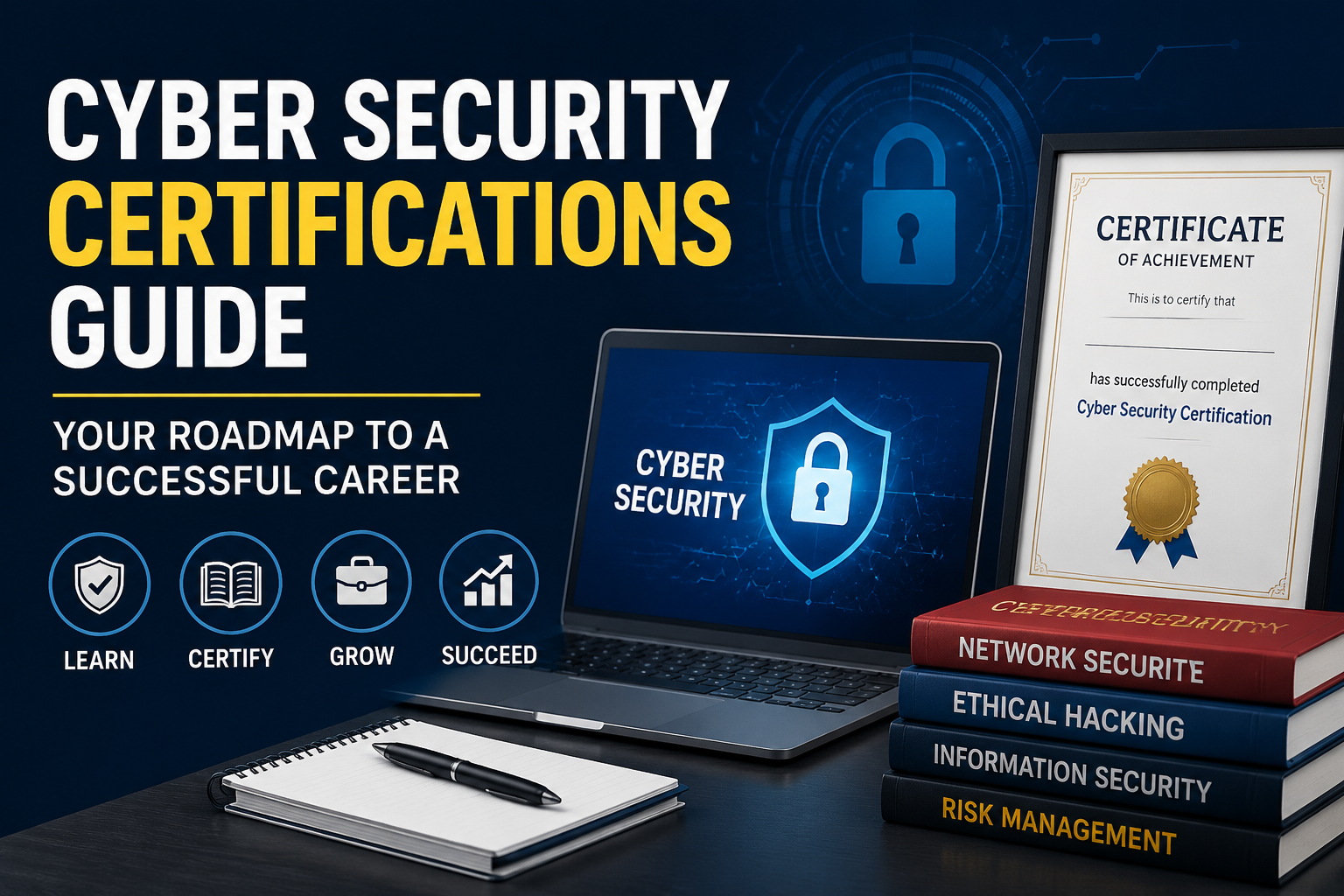
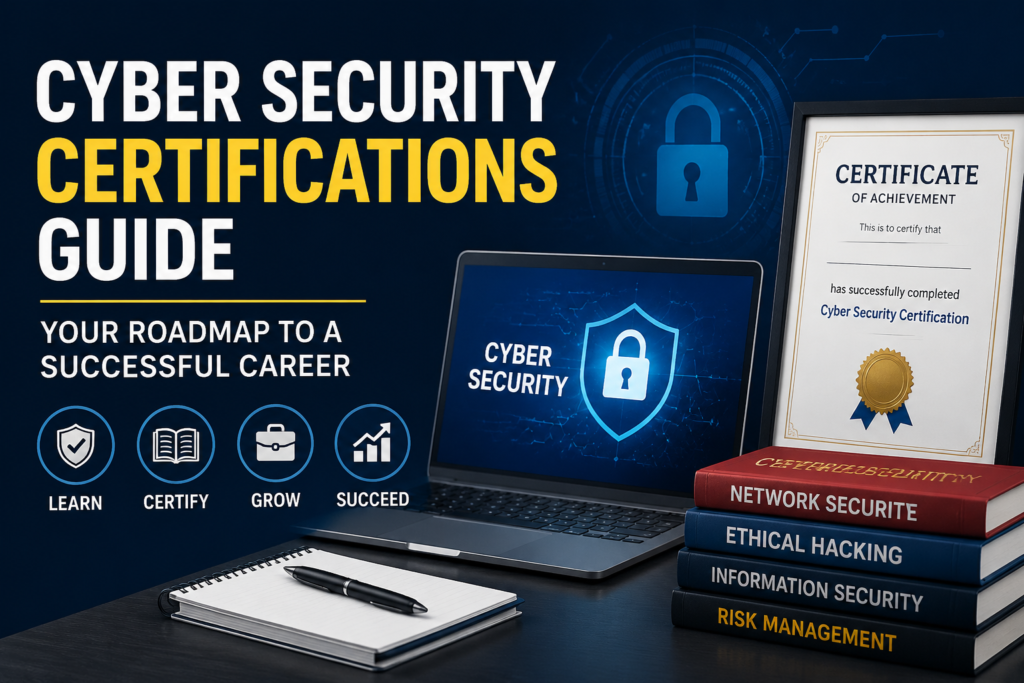
If you are planning to build a career in cyber security, one of the first questions that comes to mind is whether certifications are worth it. I had the same question when I started learning about this field. After spending time researching different certifications and understanding what employers actually value, I realized that certifications can open many doors when they are combined with practical skills and real experience.
Cyber security is one of the fastest growing industries in the world. Every day, businesses face new threats from hackers, malware, ransomware, and data breaches. Because of these challenges, companies need professionals who understand how to protect their systems and sensitive information. This is where cyber security certifications become valuable.
In this guide, I will share my thoughts on the most popular cyber security certifications, who they are designed for, and how you can choose the right one based on your goals. My aim is to make this topic simple and easy to understand, especially if you are just getting started.
What Is a Cyber Security Certification
A cyber security certification is an official credential that proves you have learned specific security concepts and passed an exam. These certifications are offered by well known organizations and are recognized by employers around the world.
Unlike a college degree, most certifications focus on practical knowledge and industry skills. They help demonstrate that you understand topics such as network security, ethical hacking, cloud security, risk management, incident response, and digital forensics.
While a certificate alone cannot guarantee a job, it can definitely strengthen your resume and make you stand out during the hiring process.
Why Cyber Security Certifications Matter
From my perspective, certifications provide structure. Instead of randomly learning different topics online, they give you a clear learning path.
Here are some important benefits.
They help build credibility with employers.
They increase your chances of getting interviews.
They keep your knowledge updated with modern security practices.
They improve your confidence while solving real world security problems.
They often lead to higher salary opportunities.
Many companies specifically mention certifications in their job descriptions. This means having the right certification can give you an advantage over other candidates.
Do Beginners Really Need Certifications
This is one of the most common questions I see.
My answer is yes, but only after learning the basics.
If you have absolutely no knowledge of networking, operating systems, or computer security, spend some time learning those fundamentals first. Once you understand the basics, earning your first certification becomes much easier.
For beginners, certifications also provide motivation because they give you a clear goal to work toward.
Best Cyber Security Certifications for Beginners
Several certifications are beginner friendly and can help you enter the industry.
CompTIA Security Plus
Security Plus is one of the most respected beginner certifications.
It covers essential security concepts including.
Network security
Threat management
Identity management
Cryptography
Risk management
Security architecture
I believe this certification offers one of the strongest foundations for anyone planning a long term cyber security career.
Google Cybersecurity Certificate
Google created this certificate specifically for beginners.
The lessons are easy to understand and focus on practical tasks rather than complicated theory.
Topics include.
Security operations
Linux
Python basics
Network security
Security tools
Risk assessment
Although it is not considered a professional certification like Security Plus, it is an excellent starting point for complete beginners.
ISC2 Certified in Cybersecurity
This certification is another excellent entry level option.
It introduces security principles, access controls, business continuity, risk management, and incident response.
Many people choose this certification because it is designed for newcomers with little or no experience.
Intermediate Cyber Security Certifications
Once you gain some experience, you can move toward more specialized certifications.
Certified Ethical Hacker
If ethical hacking interests you, this certification is one of the most recognized choices.
It teaches how attackers think and how security professionals identify vulnerabilities before criminals can exploit them.
Topics include.
Network scanning
Web application security
Password attacks
Wireless security
Social engineering
Malware analysis
I recommend learning ethical hacking through legal practice labs while preparing for this certification.
CompTIA CySA Plus
CySA Plus focuses on cyber defense instead of offensive security.
It teaches how to monitor systems, investigate threats, analyze logs, and respond to incidents.
Security analysts often choose this certification because it matches their daily responsibilities.
CompTIA PenTest Plus
PenTest Plus is another excellent option for aspiring penetration testers.
It combines theoretical knowledge with practical testing techniques, making it valuable for professionals interested in offensive security.
Advanced Cyber Security Certifications
After gaining several years of experience, advanced certifications become more valuable.
CISSP
The Certified Information Systems Security Professional certification is considered one of the highest achievements in cyber security.
It covers topics including.
Security governance
Risk management
Asset security
Software security
Network security
Identity management
Security operations
Many senior security managers, consultants, and architects hold this certification.
CISM
Certified Information Security Manager focuses on leadership rather than technical work.
It is designed for professionals managing security teams, developing security strategies, and making business decisions.
OSCP
The Offensive Security Certified Professional certification is famous for being extremely practical.
Instead of answering only multiple choice questions, candidates must successfully penetrate systems in a controlled environment.
Many employers highly respect OSCP because it proves real technical ability.
Which Certification Should You Choose
I believe the right certification depends on your career goals.
If you want a general security foundation, start with Security Plus.
If you enjoy hacking, choose Certified Ethical Hacker or PenTest Plus before aiming for OSCP.
If you enjoy monitoring threats and defending networks, CySA Plus is an excellent choice.
If you want leadership positions later in your career, plan for CISSP or CISM after gaining professional experience.
There is no single certification that fits everyone.
Skills You Should Learn Alongside Certifications
One mistake many beginners make is focusing only on passing exams.
In my opinion, practical skills matter just as much.
Spend time learning.
Linux commands
Windows administration
Networking fundamentals
Python programming
PowerShell
Cloud platforms
Virtual machines
Security tools
Wireshark
Nmap
Burp Suite
Metasploit
These skills help transform certification knowledge into real world ability.
Build Your Own Home Lab
One of the best decisions I ever recommend is creating a personal cyber security lab.
A home lab allows you to practice safely without risking real systems.
You can install virtual machines, create networks, perform vulnerability scans, and practice ethical hacking techniques.
Even a basic computer with enough memory can support multiple virtual machines for learning purposes.
Practical experience gained in a home lab often teaches more than simply reading textbooks.
Are Certifications Expensive
The cost depends on the certification.
Entry level certifications are generally more affordable, while advanced certifications can be expensive.
Besides exam fees, you may also spend money on study guides, online courses, and practice exams.
Fortunately, there are many free learning resources available online that can help reduce preparation costs.
I always recommend mastering the material before paying for an exam.
How Long Does It Take to Prepare
Preparation time depends on your background.
If you already understand networking and operating systems, you might prepare for a beginner certification within two or three months.
If you are completely new, expect to spend several months learning the basics before attempting the exam.
Consistency matters more than speed.
Studying one or two hours every day often produces better results than trying to study for long sessions only once a week.
Common Mistakes Beginners Should Avoid
I have noticed several mistakes that slow down learning.
Trying to earn too many certifications at once.
Ignoring practical hands on experience.
Memorizing answers instead of understanding concepts.
Skipping networking fundamentals.
Giving up after failing the first practice exam.
Comparing your progress with experienced professionals.
Everyone learns at a different pace. The important thing is to keep improving.
How Certifications Help During Job Interviews
Certifications not only improve your resume but also prepare you for technical interviews.
Since certification exams cover many security topics, you become more comfortable discussing security concepts with interviewers.
However, employers often ask practical questions as well.
Be prepared to explain how you would detect suspicious activity, secure a network, investigate an incident, or respond to a ransomware attack.
Real understanding always creates a stronger impression than memorized definitions.
My Final Thoughts
Cyber security certifications are valuable tools, but they should never be your only focus. I believe the strongest professionals combine certifications with practical experience, continuous learning, and genuine curiosity. Technology changes every year, and new cyber threats appear almost daily. Staying updated is part of the job.
If I were starting my journey today, I would first build a strong foundation in networking and operating systems, then earn an entry level certification like Security Plus or ISC2 Certified in Cybersecurity. After gaining hands on experience through labs and personal projects, I would move toward specialized certifications based on my interests, whether ethical hacking, security analysis, cloud security, or management.
Remember that earning one certification is not the finish line. It is simply the beginning of a learning journey that can lead to exciting career opportunities. Stay consistent, practice regularly, keep exploring new technologies, and never stop learning. With patience and dedication, cyber security certifications can become an important stepping stone toward building a successful and rewarding career in one of the world’s most in demand industries.