Introduction
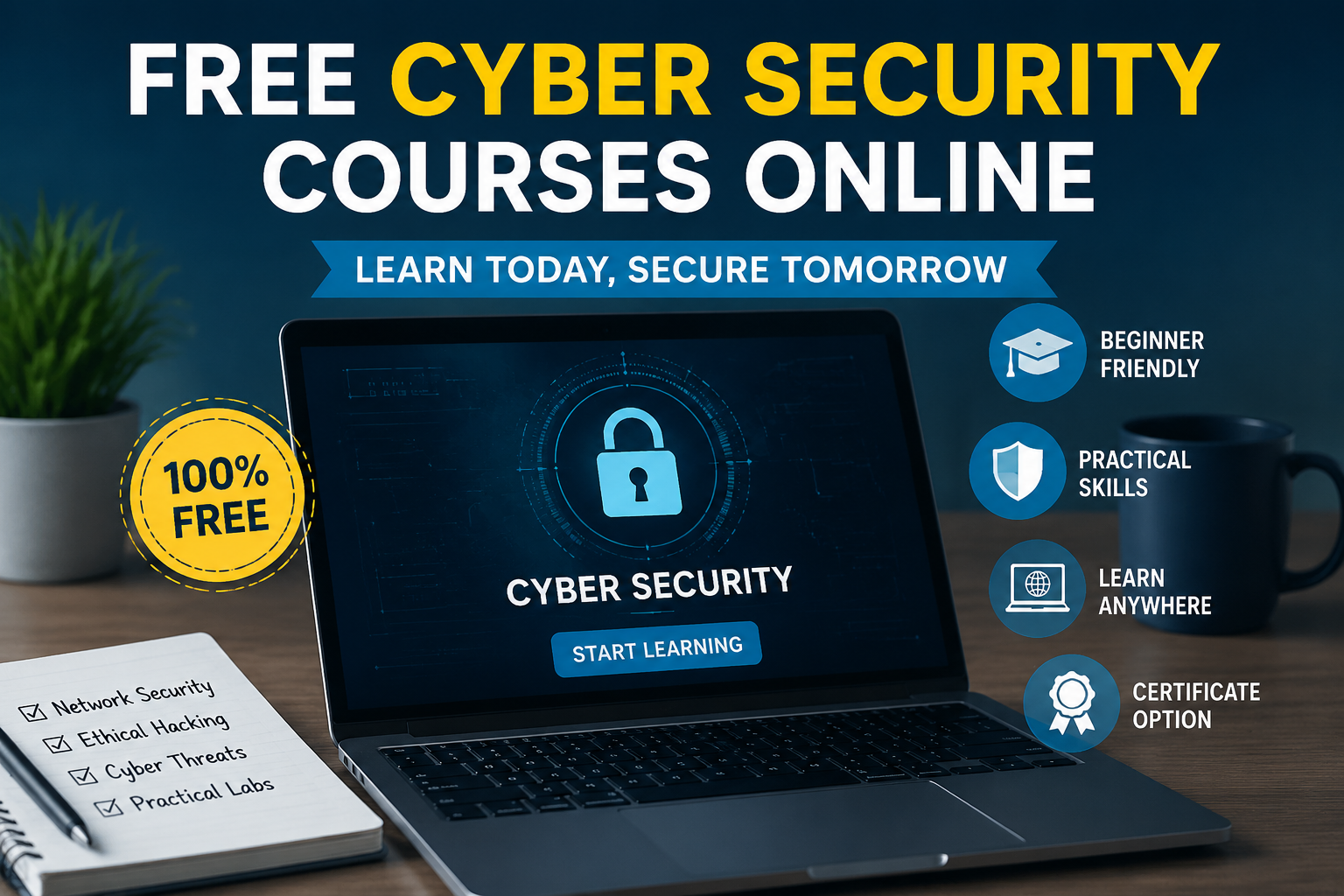
When I first became interested in cyber security, I believed that learning it would require spending hundreds of dollars on expensive courses and certifications. After doing some research, I quickly realized that this was not true. The internet has made learning easier than ever, and today there are many excellent free cyber security courses online that can help beginners and even experienced learners improve their knowledge.
I personally think that free courses are one of the best ways to explore cyber security before investing money in advanced certifications. They allow me to understand the basics, practice new skills, and discover which area of cyber security interests me the most. Whether someone wants to become an ethical hacker, security analyst, penetration tester, or digital forensics expert, there are plenty of free resources available.
In this article, I will share why free cyber security courses are valuable, where to find them, and how I believe anyone can build strong cyber security skills without spending a fortune.
Why Learn Cyber Security
Cyber security has become one of the fastest growing fields in the technology industry. Every day, businesses, governments, schools, and individuals face cyber attacks. Because of these growing threats, organizations need professionals who understand how to protect systems and sensitive information.
I believe cyber security is not only useful for people who want a technology career. Even regular internet users can benefit from understanding online safety, password management, phishing attacks, and data privacy. Learning cyber security helps me stay safe while browsing the internet and using digital services.
Another reason I recommend learning cyber security is the increasing demand for skilled professionals. Many companies are looking for experts who can identify vulnerabilities and protect their networks. Starting with free online courses is a smart way to prepare for future career opportunities.
Benefits of Free Cyber Security Courses
One of the biggest advantages of free online courses is accessibility. I can learn from anywhere as long as I have an internet connection. There is no need to travel or attend physical classes.
Another benefit is flexibility. I can study whenever I have free time. Whether it is early in the morning, during lunch breaks, or late at night, online courses allow me to learn at my own pace.
Free courses also help reduce financial pressure. Instead of paying large amounts for training, I can first build my foundation using free resources. Once I gain confidence, I can decide whether advanced paid certifications are worth pursuing.
Many free courses are created by experienced instructors, universities, and technology companies. This means I still receive quality education without paying expensive tuition fees.
Skills I Can Learn Through Free Courses
Many people think free courses only teach basic concepts, but that is not always true. Some free cyber security courses cover advanced topics that help learners build practical knowledge.
Some important skills I can learn include network security, operating system security, ethical hacking, penetration testing, malware analysis, cryptography, risk management, cloud security, digital forensics, and incident response.
I also learn how hackers think and how organizations defend themselves against cyber attacks. Understanding both offensive and defensive security helps me become a more complete learner.
Best Platforms Offering Free Cyber Security Courses
There are many trusted platforms that provide excellent free cyber security education.
Coursera
Coursera offers courses from leading universities and technology companies. Many courses can be audited for free, allowing me to watch lectures and learn without paying. Some certificates require payment, but the learning material itself is often available at no cost.
edX
edX provides university level cyber security courses from respected institutions around the world. I appreciate that the lessons are structured and easy to follow.
Cisco Networking Academy
Cisco offers several free cyber security courses designed for beginners. Their learning materials explain networking, security principles, and cyber threats in a simple way.
Google has introduced several learning programs related to cyber security and digital safety. These courses help learners understand modern security practices and industry expectations.
TryHackMe
If I want practical experience instead of only watching videos, TryHackMe is one of my favorite options. It allows me to practice real cyber security challenges in a safe environment.
Hack The Box Academy
Hack The Box offers hands on labs where I can improve my penetration testing and ethical hacking skills. Some learning content is available for free, making it an excellent place for beginners who enjoy practical learning.
Free Courses for Complete Beginners
When someone has absolutely no experience, I always recommend starting with beginner friendly courses.
The first step is learning what cyber security actually means. Understanding common cyber threats, malware, ransomware, phishing attacks, social engineering, and password security creates a strong foundation.
After learning the basics, I move on to networking concepts. Knowing how computers communicate over the internet makes advanced security topics much easier to understand.
Operating systems are another important area. Learning Windows and Linux helps me understand how attackers exploit vulnerabilities and how defenders secure their systems.
Once these fundamentals are clear, ethical hacking becomes much easier to understand.
Hands On Practice Matters
Watching videos alone will never make me a cyber security professional. Practical experience is equally important.
Whenever I complete a lesson, I try to apply what I learned. I create virtual machines, install Linux, practice networking commands, and solve beginner security challenges.
Platforms with interactive labs help me understand concepts much faster than reading theory alone. Every small exercise builds confidence and improves problem solving skills.
The more I practice, the more comfortable I become with security tools and techniques.
Building a Daily Learning Routine
One lesson I have learned is that consistency is much more important than studying for long hours once in a while. Even if I spend only thirty to sixty minutes every day, I continue making progress. Cyber security is a huge field, and trying to learn everything in one week can become overwhelming.
I usually divide my learning into small sections. One day I focus on networking, another day I study Linux commands, and the next day I practice solving security challenges. This approach keeps learning interesting and prevents burnout.
Taking notes is another habit that has helped me a lot. Whenever I discover a new command, tool, or security concept, I write it down in my own words. Revising these notes later makes it much easier to remember important information.
Common Mistakes Beginners Should Avoid
Many beginners believe they need to master every topic immediately. I used to think the same way, but I soon realized that cyber security is a continuous learning journey. Even experienced professionals continue learning because technology changes every day.
Another mistake is relying only on videos without practicing. Watching tutorials may help me understand concepts, but real improvement comes from using those concepts in practical environments.
Some people also skip networking and operating system basics because they want to start ethical hacking immediately. In my opinion, this creates knowledge gaps that make advanced topics much harder to understand. Building a strong foundation always saves time in the future.
I also avoid downloading unknown hacking tools from random websites. Using trusted learning platforms keeps my computer safe and ensures I am learning legally and responsibly.
Can Free Courses Help Me Get a Job
I believe free courses are an excellent starting point, but employers usually look for more than course completion. They want to see practical skills, problem solving ability, and a willingness to learn.
That is why I recommend creating personal projects while studying. I can build a home lab, practice on legal training platforms, document my learning journey, and create a portfolio that demonstrates my knowledge.
Even without expensive certifications, practical experience can make a strong impression during interviews. Many hiring managers value real skills more than simply collecting certificates.
As my knowledge grows, I can later pursue industry recognized certifications if they fit my career goals.
Combining Multiple Learning Resources
I never depend on only one website. Every platform has its own strengths, and combining several resources gives me a broader understanding.
For example, I may learn networking concepts from one course, Linux basics from another, and then practice everything through interactive labs. Reading blogs, watching educational videos, and participating in online communities also helps me stay updated with new security trends.
This combination of theory and practice has made my learning much more effective than following a single source.
Staying Motivated
There are times when cyber security feels difficult. Some topics take longer to understand, and certain practical exercises may seem impossible at first. Instead of getting discouraged, I remind myself that every expert was once a beginner.
Celebrating small achievements keeps me motivated. Completing a course, solving a lab, or understanding a challenging concept gives me confidence to continue learning.
I also enjoy following cyber security news because it shows how the knowledge I am gaining is applied in the real world. Reading about data breaches, ransomware attacks, and new security technologies reminds me why this field is so important.
My Recommended Learning Path
If I were starting again from the beginning, I would follow a simple roadmap.
I would first learn basic computer concepts and internet fundamentals. Next, I would study networking and understand how devices communicate. After that, I would become comfortable using both Windows and Linux operating systems.
Once these basics are clear, I would move on to cyber security fundamentals, including encryption, authentication, firewalls, and common cyber threats. Then I would begin learning ethical hacking concepts and practice them in legal training environments.
Finally, I would explore specialized areas such as cloud security, penetration testing, malware analysis, digital forensics, or security operations depending on my interests.
Following a structured path makes learning much less confusing and helps me build knowledge step by step.
Conclusion
From my experience, free cyber security courses online are one of the best opportunities available for anyone who wants to learn valuable digital skills without spending money. They remove financial barriers and make quality education available to people around the world.
I believe success in cyber security does not depend on how much money I spend on courses. It depends on my curiosity, consistency, willingness to practice, and determination to keep learning. Free resources can provide an excellent foundation, but my dedication is what truly makes the difference.
If I stay committed, practice regularly, and continue improving my skills every day, I can build a strong understanding of cyber security and prepare myself for exciting career opportunities in the future. Every expert once started with the basics, and I believe anyone can begin this journey today with the many free online cyber security courses available on the internet.