When I first started learning about digital security, I thought Cyber Security and Information Security were exactly the same. I used to hear both terms in blogs, online courses, and technology discussions, and I assumed they referred to the same thing. However, after spending time understanding these concepts, I realized that although they are closely connected, they are not identical. They have different goals, different areas of focus, and different methods of protecting valuable information.
In today’s digital world, almost every individual and business depends on technology. We use smartphones, laptops, cloud storage, banking apps, and social media every day. As our dependence on technology continues to grow, protecting information becomes more important than ever. This is where both Cyber Security and Information Security play a major role.
In this article, I want to explain the difference between Cyber Security and Information Security in a simple and practical way. My goal is to help beginners understand these two concepts without using confusing technical language.
What Is Cyber Security
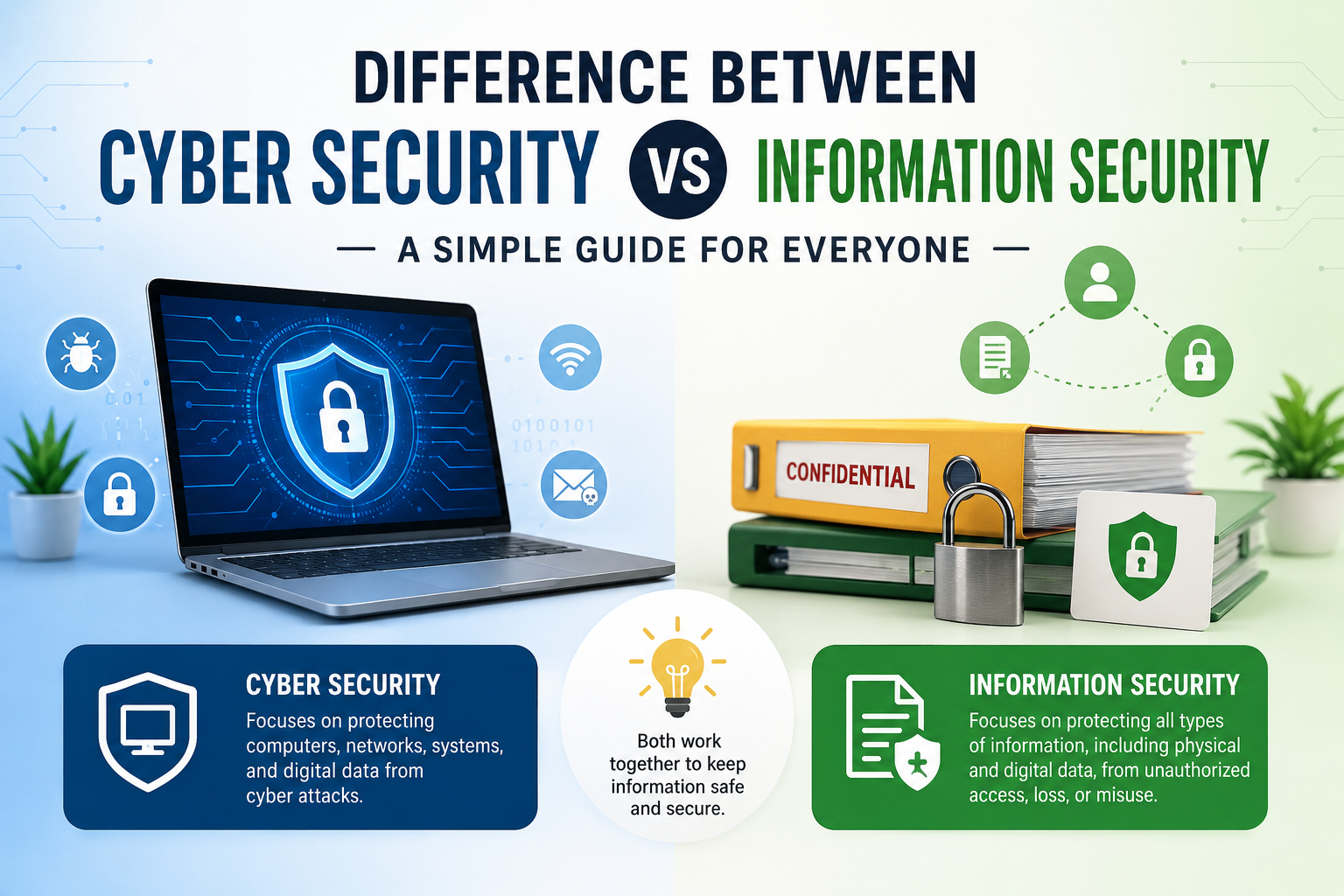
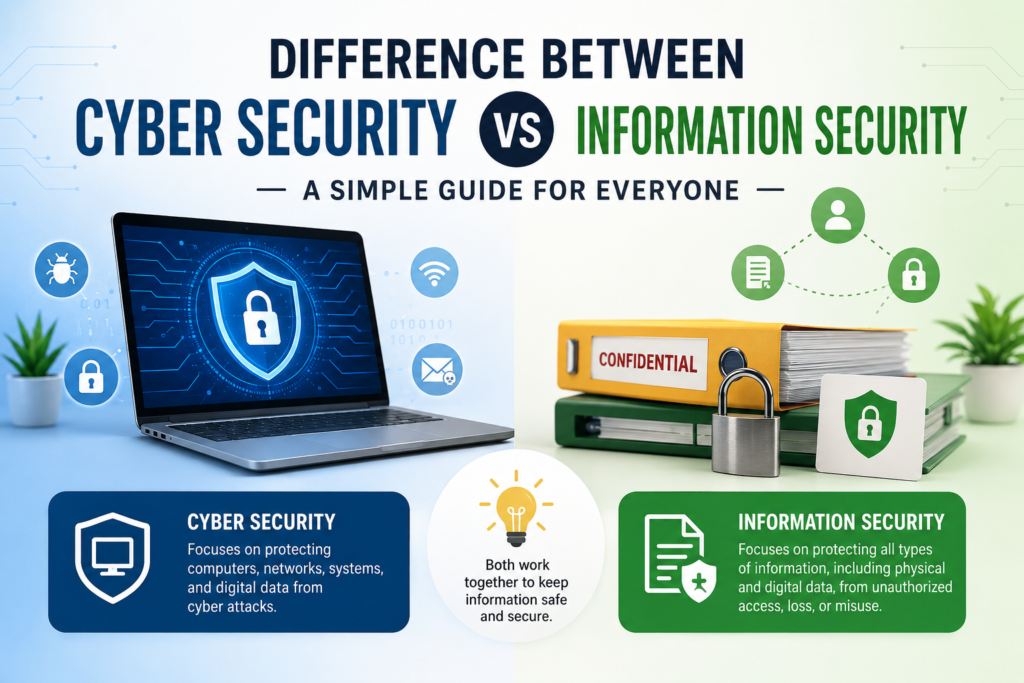
Cyber Security is the practice of protecting computers, networks, software, and online systems from cyber attacks. Whenever I think about Cyber Security, I imagine a strong digital shield that protects devices from hackers, viruses, ransomware, phishing attacks, and many other online threats.
Cyber Security focuses mainly on protecting digital environments. It ensures that hackers cannot steal, damage, or misuse digital information stored on computers or transmitted over the internet.
Cyber Security includes many different areas such as network security, cloud security, application security, endpoint security, and incident response. Each area works together to defend systems against modern cyber threats.
For example, when I use antivirus software on my computer or enable two factor authentication for my online accounts, I am following Cyber Security practices.
What Is Information Security
Information Security is much broader than Cyber Security. Its main purpose is to protect all types of information, whether that information exists in digital form or on paper.
Whenever I hear the term Information Security, I think about protecting valuable information from unauthorized access, alteration, theft, or destruction.
Information Security focuses on three important principles.
Confidentiality
Only authorized people should have access to sensitive information.
Integrity
Information should remain accurate and should not be changed without permission.
Availability
Authorized users should be able to access information whenever they need it.
These three principles are commonly known as the CIA Triad and form the foundation of Information Security.
For example, a company may store employee records inside locked filing cabinets. Those documents are not digital, but they still require protection. This falls under Information Security instead of Cyber Security.
The Main Difference Between Cyber Security and Information Security
The easiest way I explain the difference is that Cyber Security protects digital systems, while Information Security protects information regardless of where it exists.
Cyber Security mainly deals with online threats such as malware, ransomware, phishing, hacking, and network attacks.
Information Security covers digital information as well as physical documents, confidential files, business records, customer information, legal documents, and even verbal communication if it contains sensitive information.
This means Cyber Security is actually one part of Information Security.
Every Cyber Security strategy supports Information Security, but Information Security includes many additional protective measures beyond technology.
Areas Covered by Cyber Security
Cyber Security usually includes several important areas.
Network Security protects communication between computers and prevents unauthorized access.
Application Security ensures software remains secure against vulnerabilities.
Cloud Security protects cloud based services and stored information.
Endpoint Security protects laptops, smartphones, and desktop computers.
Email Security helps prevent phishing attacks and malicious emails.
Identity Management ensures only authorized users can access digital systems.
Threat Detection identifies suspicious activities before they cause damage.
Incident Response helps organizations recover quickly after a cyber attack.
These areas focus mainly on defending digital infrastructure.
Areas Covered by Information Security
Information Security covers a wider range of protective measures.
Physical security protects offices and data centers.
Access control limits who can view confidential information.
Document management ensures important records remain secure.
Data classification organizes information according to its sensitivity.
Risk management identifies potential threats before they become serious.
Employee awareness training teaches staff how to handle sensitive information responsibly.
Security policies establish rules for protecting business information.
Backup and disaster recovery ensure important information remains available during emergencies.
As I learned more about Information Security, I realized it is not limited to computers. It includes people, processes, policies, and physical protection as well.
Common Threats Faced by Cyber Security
Cyber Security professionals deal with many different online attacks every day.
Hackers constantly search for system vulnerabilities.
Malware can damage computers or steal information.
Ransomware locks important files until payment is made.
Phishing emails trick users into revealing passwords.
Spyware secretly monitors user activities.
Distributed denial of service attacks overwhelm websites and make them unavailable.
Password attacks attempt to guess login credentials.
Insider threats involve employees who intentionally or accidentally expose sensitive information.
These threats continue evolving every year, making Cyber Security an ongoing challenge.
Common Risks Addressed by Information Security
Information Security protects against many risks beyond cyber attacks.
Unauthorized employees accessing confidential documents.
Loss of paper records.
Natural disasters damaging important files.
Improper disposal of sensitive documents.
Human mistakes that expose confidential information.
Physical theft of company devices.
Weak organizational policies.
Lack of employee awareness.
These risks demonstrate why Information Security goes beyond technology.
Real World Example
To understand the difference more clearly, I like to think about a hospital. A hospital stores thousands of patient records every day. Some records are stored on computers while others may still exist as printed documents.
Cyber Security protects the hospital’s computers, servers, medical software, and online databases from hackers and malware. Firewalls, antivirus software, encryption, and secure login systems all belong to Cyber Security.
Information Security protects every patient record whether it is digital or printed. It also includes policies about who is allowed to view patient records, how documents should be stored, how they should be destroyed when no longer needed, and how employees should handle confidential information.
This example helped me understand that Cyber Security focuses on digital protection, while Information Security protects information in every possible form.
Key Differences Between Cyber Security and Information Security
Although these two fields work closely together, there are several important differences.
Cyber Security mainly focuses on protecting digital assets such as computers, networks, applications, cloud services, and online accounts.
Information Security focuses on protecting all forms of information including digital files, printed documents, emails, databases, and even verbal communication that contains sensitive information.
Cyber Security deals with cyber criminals, hackers, malware, phishing attacks, ransomware, and network intrusions.
Information Security deals with broader risks such as unauthorized access, employee mistakes, physical theft, document loss, and poor security practices.
Cyber Security uses technical tools such as firewalls, antivirus software, intrusion detection systems, encryption, and multi factor authentication.
Information Security combines technical solutions with physical security, employee training, company policies, access control, and risk management.
In simple words, every Cyber Security practice supports Information Security, but Information Security also includes many protections that are not related to technology.
Why Businesses Need Both
From my point of view, businesses cannot rely on only one of these security approaches. Modern organizations need both Cyber Security and Information Security to protect their operations.
Imagine a company with excellent Cyber Security tools but no rules for handling printed documents. Employees could accidentally leave confidential files on their desks where anyone could read them.
Now imagine another company with excellent document management but weak Cyber Security. Hackers could easily break into their network and steal customer information.
Both situations can lead to financial losses, legal issues, and damage to the company’s reputation.
That is why successful organizations combine Cyber Security and Information Security into one complete security strategy.
Skills Required in Cyber Security
People who work in Cyber Security usually develop strong technical skills.
They learn networking.
They understand operating systems.
They study ethical hacking.
They perform vulnerability assessments.
They analyze malware.
They monitor security events.
They investigate cyber attacks.
They work with cloud security.
They respond to security incidents.
Since cyber threats continue changing every day, Cyber Security professionals must keep learning throughout their careers.
Skills Required in Information Security
Information Security professionals need both technical knowledge and management skills.
They create security policies.
They perform risk assessments.
They manage compliance requirements.
They educate employees.
They classify sensitive information.
They design access control systems.
They conduct security audits.
They prepare disaster recovery plans.
They ensure that organizations follow industry regulations.
This field requires communication, planning, and leadership in addition to technical knowledge.
Career Opportunities
Both Cyber Security and Information Security offer excellent career opportunities because organizations everywhere need better protection.
Popular Cyber Security careers include Cyber Security Analyst, Ethical Hacker, Penetration Tester, Security Engineer, Cloud Security Specialist, Incident Response Analyst, and Security Consultant.
Information Security careers include Information Security Analyst, Information Security Manager, Risk Manager, Compliance Officer, Security Auditor, Governance Specialist, and Chief Information Security Officer.
As technology continues to grow, demand for professionals in both fields is expected to remain strong for many years.
Which One Should Beginners Learn First
If someone asks me where they should start, I usually recommend beginning with Cyber Security because it introduces many important concepts about protecting digital systems.
Learning about networks, passwords, encryption, malware, and online attacks provides a strong foundation.
After understanding Cyber Security, it becomes much easier to learn Information Security because many of its principles build upon those technical concepts while also expanding into policies, risk management, and organizational security.
Of course, both subjects complement each other, and learning them together creates a more complete understanding of modern security.
Best Practices for Better Security
Whether you are an individual or a business owner, there are several habits that improve both Cyber Security and Information Security.
Use strong and unique passwords.
Enable two factor authentication whenever possible.
Keep software updated regularly.
Install trusted antivirus software.
Create regular backups of important files.
Encrypt sensitive information.
Limit access to confidential data.
Train employees to recognize phishing emails.
Store physical documents in secure locations.
Destroy confidential documents safely when they are no longer needed.
Review security policies regularly.
Monitor systems for unusual activity.
Small security habits can prevent major problems in the future.
Final Thoughts
In my opinion, understanding the difference between Cyber Security and Information Security is essential for anyone who uses technology today. At first, these two terms may sound identical, but they serve different purposes.
Cyber Security focuses on protecting computers, networks, software, and digital systems from online attacks. Information Security has a wider scope because it protects information in every form, whether digital, physical, or verbal.
Neither one is more important than the other. Instead, they work together to create a complete security framework that protects people, businesses, and valuable information.
As cyber threats continue becoming more advanced, organizations must invest in both Cyber Security and Information Security. Individuals should also follow safe online practices and understand how their personal information is protected.
The more I learn about these fields, the more I realize that security is not just about installing software. It is about creating good habits, following strong policies, using the right technology, and staying aware of new threats. By understanding the differences and the relationship between Cyber Security and Information Security, we can make smarter decisions and contribute to a safer digital world.